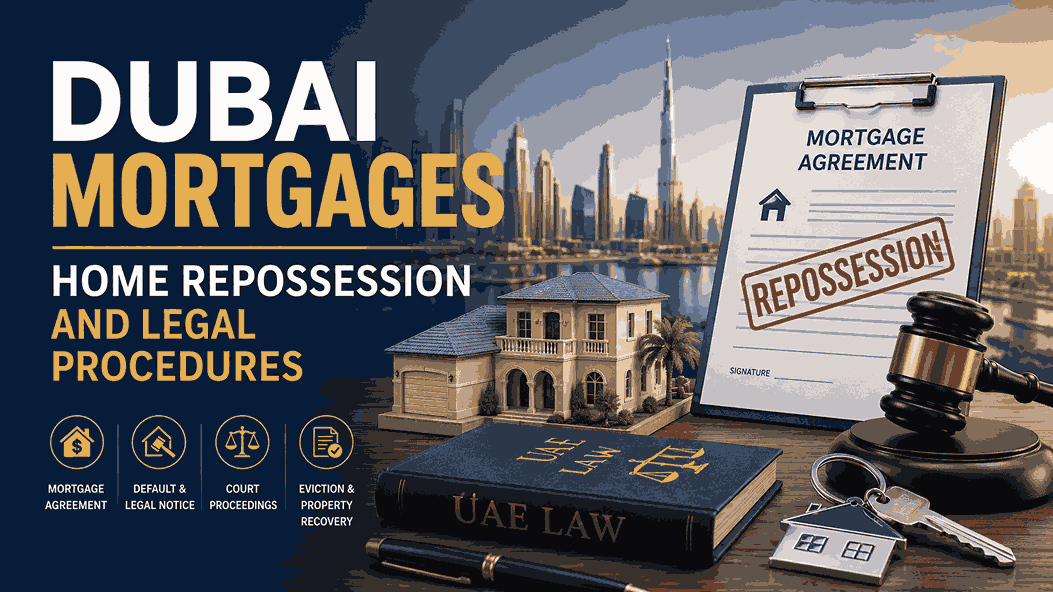
Missing payments in Dubai mortgages trigger a legal process governed by specific laws. Understanding these procedures helps protect your property and financial interests. The Dubai Mortgage Law (Law No. 14 of 2008) clearly outlines every step.
The 30-Day Notice Requirement
When borrowers default on Dubai mortgages’ payments, banks must follow legal procedures. The mortgagee (bank or financial institution) must serve a 30-day notice. This notice must be delivered through a Notary Public to the borrower.
This notification period gives borrowers time to settle outstanding debts. During these 30 days, borrowers can arrange payment or seek alternatives. The notice formally initiates the foreclosure process but does not guarantee immediate sale.
Article 25 of the Dubai Mortgage Law specifies these requirements exactly. The law states the mortgagee may commence foreclosure after proper notice. However, the borrower must receive formal notification through official channels.
When Can Banks Begin Foreclosure Proceedings?
If the borrower fails to pay within the 30-day period, enforcement proceedings begin. The bank applies to an enforcement court for a seizure order. The court then authorizes public auction of the mortgaged property.
Article 26 of the Dubai Mortgage Law governs this stage. The enforcement judge issues an attachment order against the property. Sales proceed through a public auction in accordance with Dubai Land Department procedures.
This process protects both lenders and borrowers by ensuring transparent procedures. Open auctions prevent unfair property valuations. The court system adds legal oversight to foreclosure actions.
Requesting a Grace Period Extension
Borrowers or property securities have one opportunity for a delay. You can request the enforcement court delay the property auction. The court can grant this request only once and for a maximum of 60 days.
The court will consider two specific factors for approval. First, the court assesses whether you can repay outstanding debt within 60 days. Second, the court evaluates whether an immediate sale would cause significant financial loss.
If the court determines either condition applies, it may grant an extension. This grace period provides breathing room for financial recovery. However, this extension is discretionary, not guaranteed.
What Happens During the Grace Period
The 60-day grace period begins after court approval. During this time, the foreclosure process pauses temporarily. You must use this period constructively to arrange payment.
Article 27 of the Dubai Mortgage Law specifies this grace period provision. The court has discretion to grant extensions based on the circumstances. Financial hardship or strong repayment prospects improve approval chances.
The Public Auction Process
If payment remains outstanding after the grace period expires, auction proceeds. Article 28 of the Dubai Mortgage Law governs this final stage. The property sale must occur within 30 days of the grace period expiring. The Dubai Land Department conducts auctions according to established procedures. Public auctions ensure transparent sales at fair market valuations. The highest bidder acquires the property through this process.
UAE Civil Transactions Law Provisions
The Federal Decree-Law No. 25 of 2025 provides an additional framework. This Civil Transactions Law applies across the entire UAE. Article 1327 confirms foreclosure rights for secured mortgagees. The law requires mortgagees to notify borrowers before proceeding. All legal procedures must occur under court supervision. Competent courts ensure compliance with applicable Dubai mortgage legislation.
Protecting Your Interests
Understanding these processes helps borrowers prepare strategically. Seek independent legal advice from UAE-qualified legal counsel immediately. Professional guidance clarifies your specific situation and options. For example, if you are planning to invest in Dubai and stay in the UAE for a while to explore adventurous things to do, these policies will help you a lot.
Proactive communication with your lender is essential. Many banks offer restructuring or forbearance programs for struggling borrowers. Requesting assistance before default proceedings begin increases negotiation options. Document all communications with your financial institution carefully. Keep records of payment attempts, notices, and court documents. This documentation proves valuable if disputes arise later.