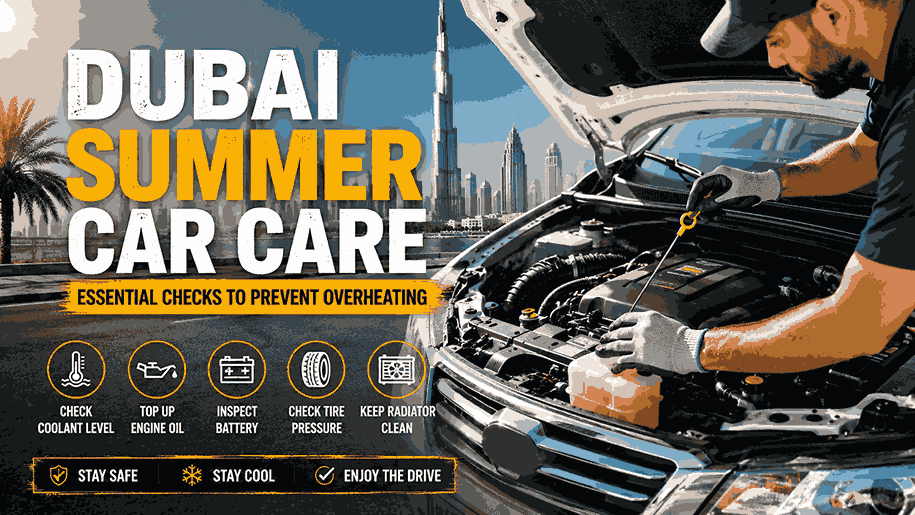
It was a normal evening commute through Ras Al Khor when Dubai engineer Abdul Aziz noticed a burning smell inside his car. Within minutes, the smell had intensified enough to prompt him to pull over immediately. Fortunately, he reached a nearby garage before any serious damage occurred. This has started a debate over Dubai Summer car care, as the summer season in the UAE is extremely dangerous and unpredictable.
The mechanic’s diagnosis was straightforward: the coolant level had dropped significantly below the minimum mark. Another hour on the road at peak summer temperatures could have meant a seized engine and repair bills reaching thousands of dirhams.
“This is exactly what we see happening repeatedly during UAE summer,” the mechanic explained. “Small issues—coolant leaks, weak batteries, worn hoses—become major problems when temperatures soar beyond 50°C.”
Why Dubai Summer Car Care is Important
While modern vehicles are engineered to withstand high temperatures, the extreme heat of a UAE summer places unprecedented stress on critical systems. The cooling system, battery, tires, engine fluids, and electrical components all work harder during peak summer months.
According to Sony Rajappan from Carlynx, a Dubai-based automotive workshop, the good news is that most summer breakdowns are preventable. “Simple checks carried out regularly can make a significant difference to a vehicle’s performance and reliability,” he explains.
1. Monitor Your Cooling System—It Works Hardest in Summer
Mechanics unanimously agree: the cooling system is the single most critical component to check during summer. Neglecting coolant levels or ignoring small leaks can quickly cascade into severe engine damage.
“Many motorists only check their engine oil,” Rajappan points out. “But the cooling system works the hardest during summer. A small coolant leak can quickly turn into a major engine problem if left unattended.”
What to do:
- Inspect the coolant reservoir regularly and never ignore even a small leak to protect your vehicle and follow the Dubai Summer car care protocol.
- Clean the radiator periodically—dust and sand can clog it, restricting airflow and reducing cooling efficiency
- If the temperature gauge starts rising, stop driving immediately and have the vehicle inspected. It would be perfect to check your car before enjoying the best happy hour deals in Dubai in 2026.
2. Check Under the Bonnet Weekly for Leaks and Damage
A five-minute inspection under the bonnet once a week could prevent expensive repairs down the line. Nabeel Ahmed from Rukn Yaqoot Garage in Sharjah emphasizes the importance of catching minor issues early.
“These may seem like small issues at first, but extreme heat can make them worse very quickly,” Ahmed explains. “Fixing a minor leak early is far cheaper than replacing a damaged engine later.”
Look for signs of:
- Coolant leaks (bright green, orange, or pink puddles)
- Engine oil leaks (dark, slick residue)
- Fuel leaks (strong fuel smell)
- Cracked, damaged, or brittle hoses
- Damaged or loose wiring
3. Test Your Battery Before It Fails You
High temperatures are among the biggest causes of battery failure in the UAE, especially in the areas near Marina Beach or other related zones. While many drivers assume their battery is fine until the car refuses to start, heat actually shortens battery life significantly.
“If your battery is more than three years old, you should have it tested, particularly before the peak summer months,” advises Nabeel Ahmed. “Regular testing can prevent unexpected breakdowns that leave you stranded on a hot road.”
Battery testing is quick, inexpensive, and widely available at most workshops across Dubai and the UAE. It’s far cheaper than having to jump-start your car on a scorching summer day or replacing a failed battery.
4. Check Tire Pressure When Tires Are Cold
Tires naturally gain pressure as temperatures rise. This can create significant safety and handling issues if left unchecked. Abdullah from Falcon Garage recommends checking tire pressure early in the morning, before the sun has heated the tires.
“Driving with incorrect tyre pressure affects handling, increases tyre wear and can become a safety risk during hot weather,” Abdullah explains. “Always follow the manufacturer’s recommended pressure—you’ll find this in your owner’s manual or on a sticker inside the driver’s door.”
Incorrect tire pressure also increases fuel consumption and puts additional stress on the tires themselves, which can lead to blowouts in extreme summer heat.
5. Inspect Belts, Hoses and Electrical Wiring
Rubber components become brittle over time, especially when exposed to relentless summer heat. Damaged wiring can create serious problems in extreme heat, potentially leading to electrical fires.
“Ensure hoses are not cracked and that electrical wiring remains secure, especially if the vehicle has undergone aftermarket modifications,” Abdullah advises. “Avoid poor-quality electrical accessories or loose wiring. If you notice any damaged cables or unusual smells, have the vehicle inspected immediately.”
Pay special attention to:
- Serpentine belts that look cracked or frayed
- Coolant hoses that appear soft, brittle, or have visible cracks
- Exposed or damaged electrical wiring
- Any unusual burning smells coming from the engine bay
6. Clean the Radiator and Engine Bay Regularly
The desert environment means dust, sand, and debris accumulate rapidly in Dubai. This buildup reduces airflow to the radiator and traps heat in the engine bay, forcing your cooling system to work even harder.
“It only takes a few minutes, but cleaning the radiator and engine bay helps the engine cool more efficiently and reduces unnecessary heat build-up,” Rajappan points out.
Simple cleaning tasks include:
- Removing leaves, plastic bags and other debris from the engine bay
- Gently cleaning radiator fins (be careful not to bend them)
- Clearing any sand buildup around cooling fans
Prevention is Cheaper Than Repair
Most major breakdowns don’t happen suddenly. Vehicles typically give warning signs first: unusual smells, a rising temperature gauge, or sounds that don’t seem right. Paying attention to these warning signs and carrying out basic checks can save you thousands of dirhams.
While regular servicing schedules remain important, mechanics emphasize that drivers shouldn’t wait until their next scheduled service to inspect their vehicles. Regular visual checks, especially during peak summer months, can help identify small problems before they become expensive repairs.
“Your car gives you signals when something is wrong,” Rajappan concludes. “Listen to those signals. A small repair today can prevent a massive breakdown tomorrow.”
For more practical tips on living and maintaining your lifestyle in Dubai, visit Seek Dubai for the latest guides and expert advice.